


Vogue’s famed September issue is the most important of the year.
An edition that is meant to signal a shift in the fashion tides—both seasonally and culturally. Chock-full of coveted ad placements, emerging trends, and a gripping cover story, the September issue is touted as the magazine to rule all magazines. The cover to rule all covers.
Hell, there’s even an entire documentary dedicated to the creation of this esteemed edition, The September Issue (2009).
“Well, I think it’s a combination of our history—September’s always been the most important month. It was amplified by the documentary that was made many years ago. There is an excitement around that time of the year—fall clothes, by nature. More to look at. More to photograph. More to take videos of…The spring collections…I think there’s just a sense of everything starting over.” —Anna Wintour on why the September issue is important
Vogue made the conscious effort to put this particular magazine on a pedestal. And so, as with all self-important creative contributions, it’s subject to intense criticism.
The intense criticism in question? Well, it’s in the room with us.
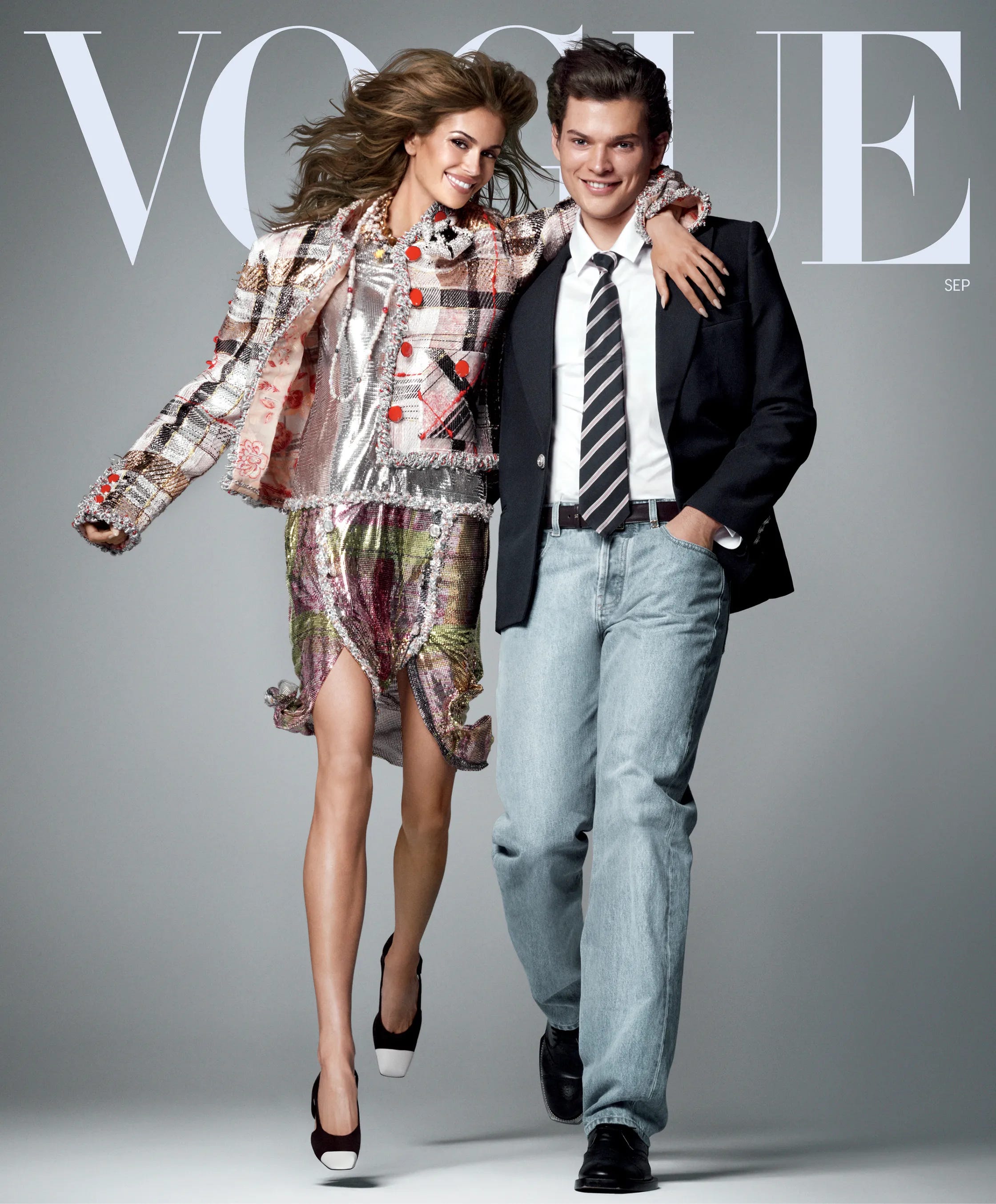
On August 11th, American Vogue revealed the new September 2026 issue, and it’s…downright depressing, completely uninspired, and evokes the feeling of a Kohl’s back-to-school ad. Yes, derogatory. It features model and actress Kaia Gerber (daughter of Cindy Crawford) alongside acting newbie Homer Gere (son of Richard Gere), photographed by Steven Meisel, with both wearing head-to-toe Chanel.
What makes this pair so special? Special enough to be the sole focus of the esteemed September issue? Two words: Ryan Murphy.
In a SHOCKING turn of events (that nobody saw coming), Vogue completely sold out its September issue cover to act as sloppy sponcon for Murphy’s new FX show, The Shards, based on a 2023 novel by Bret Easton Ellis.
If you’re thinking: “What the hell is The Shards?” You are completely valid. Everything I’ve learned about this “teen thriller” has been against my will/gun-to-my virtual head. The marketing for this show came, seemingly, out of nowhere and feels just as contrived as a podcast ad read for AG1. Stop trying to make ‘fetch’ happen.
And most (if not all) of the content I’ve seen to promote the show has not a smidge to do with the show itself. It simply revolves around:
Once upon a time Cindy Crawford and Richard Gere were married. Now, their kids are in a show together.
That’s it.
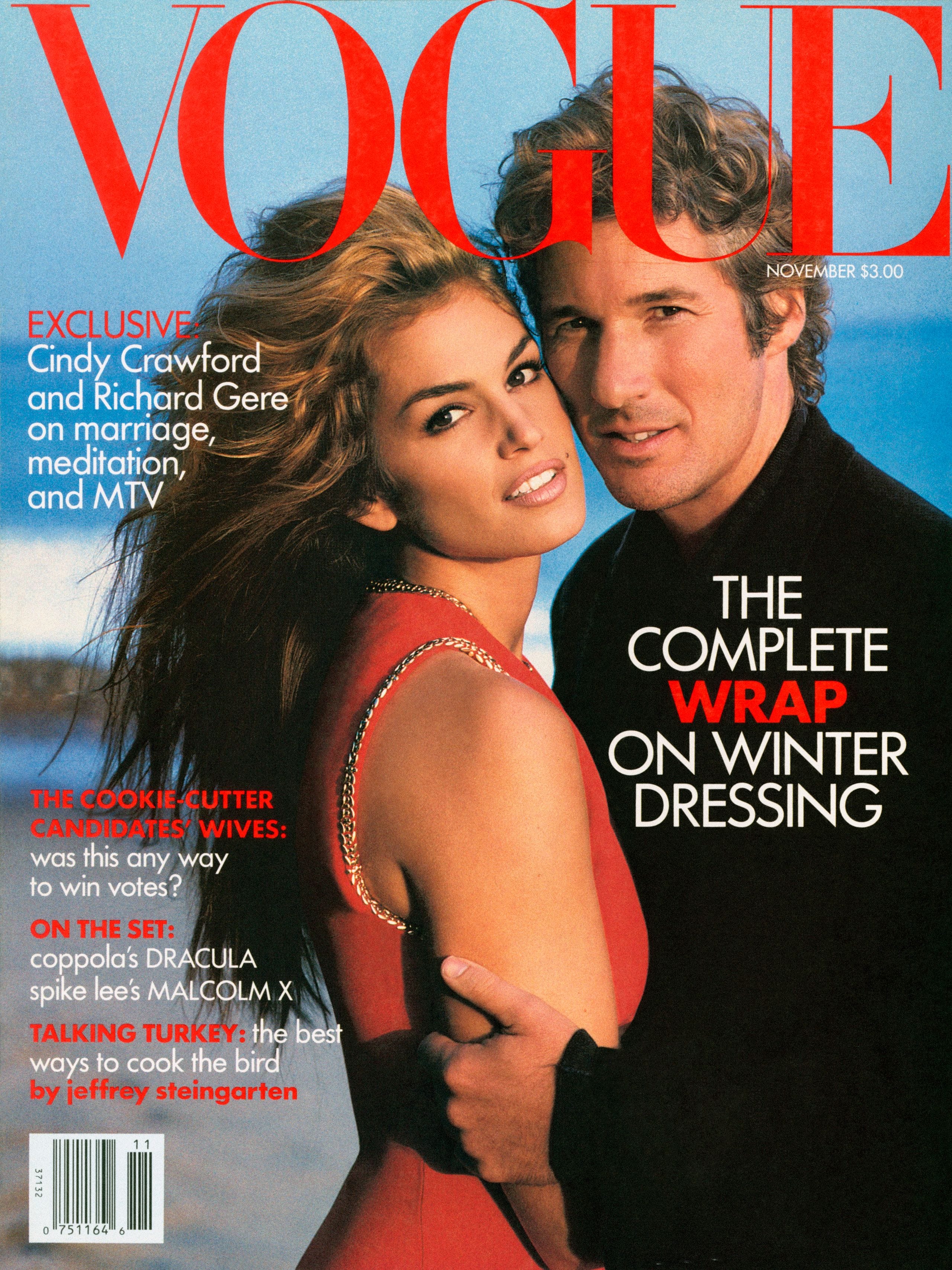
As a self-proclaimed pop-culture head, this factoid is fun, but it’s not interesting enough to carry an entire marketing campaign for a television show. It’s weak. It’s gimmicky. It’s stale. And it’s also the reason Gerber and Gere are on the cover—a callback to Vogue’s iconic November 1992 cover featuring their parents, a year into marriage. A cover that (might I add) actually makes you feel something. The expressive color palette. The on-location photoshoot. The chemistry between the couple. It’s practically everything this new cover is not.


How do I hate thee? Let me count the ways.
What is the best way to describe the aura coming from this cover? Void. Infinite blankness. I look at this photo and feel an intense sense of nothingness wash over me. And for that, I’m enraged.
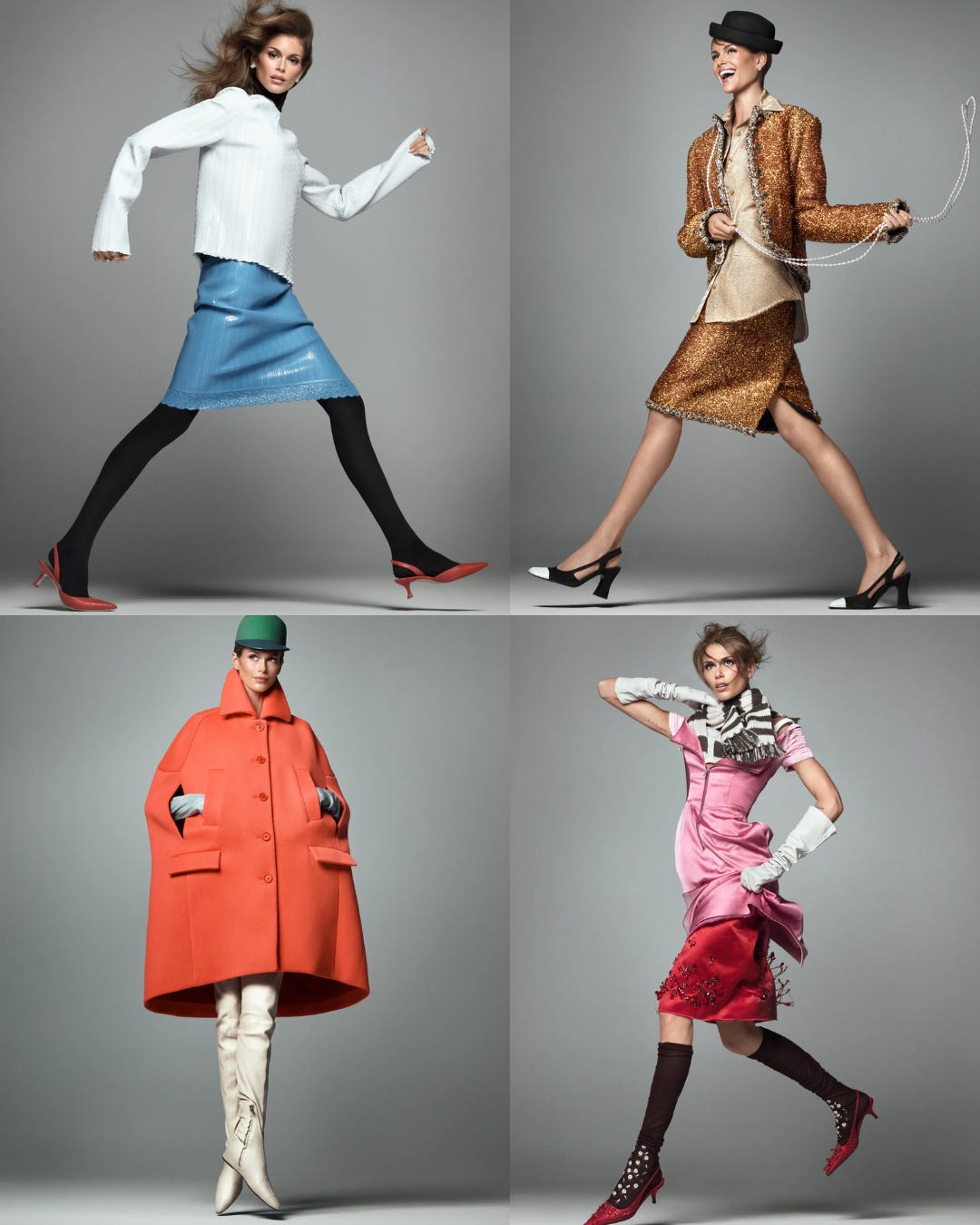
The biggest offender in this shoot is the dreary grey backdrop. I can’t even begin to imagine why anyone on God’s green earth thought this was a good idea. Steven Meisel is famous for often capturing subjects in front of neutral grey backdrops, but what he’s best at is moody, black-and-white photography, where this sort of creative choice makes sense. For a cover that’s meant to represent fresh faces and a new generation of style and celebrity (or whatever?), this is not the correct vibe.
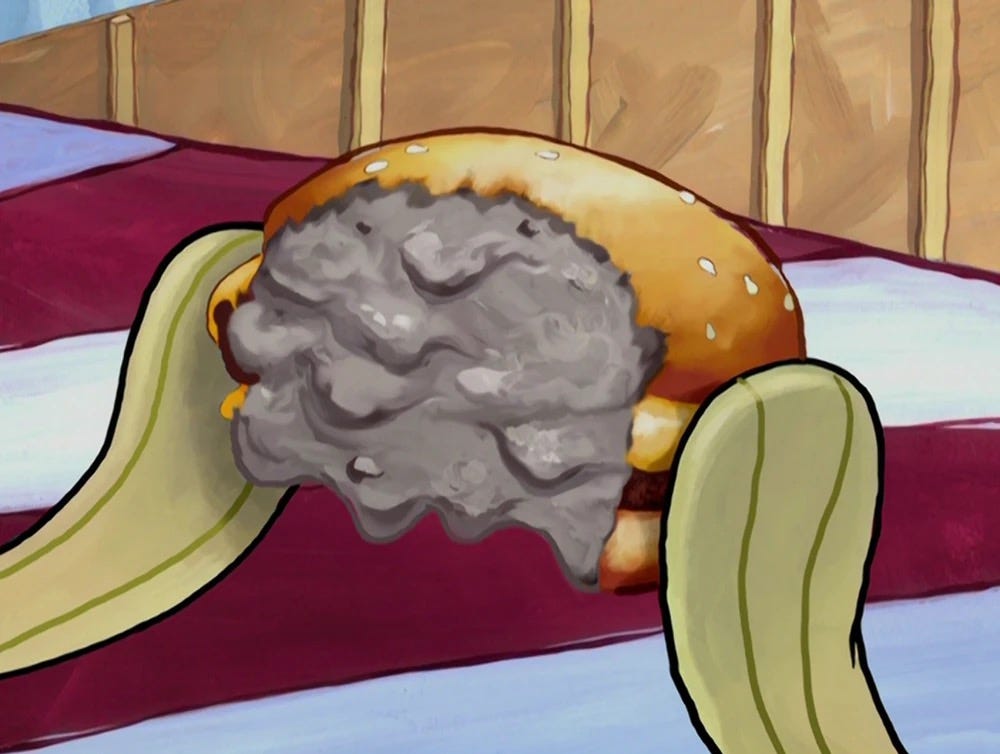
Instead, the color is lifeless. It washes everything out. For a brand like Chanel, which has had new life breathed into it by creative director Matthieu Blazy, I’ve never seen these clothes look SO flat. There’s no contrast to be found. And clearly no budget, either.
I’m not going to say everyone who approved this should serve jail time, but I’m not not going to say it.
American Vogue has been on a famously depressing streak of rarely shooting on location, often opting for boring, blank sets to serve as the background for celebrity cover shoots. And this cover is clearly no different. It feels like an afterthought…especially since other Vogue publications (i.e., Vogue Italia, Vogue Portugal, British Vogue, etc.) are fashioning creative covers so beautiful, they could be standalone pieces of art that I’d happily display on my walls.
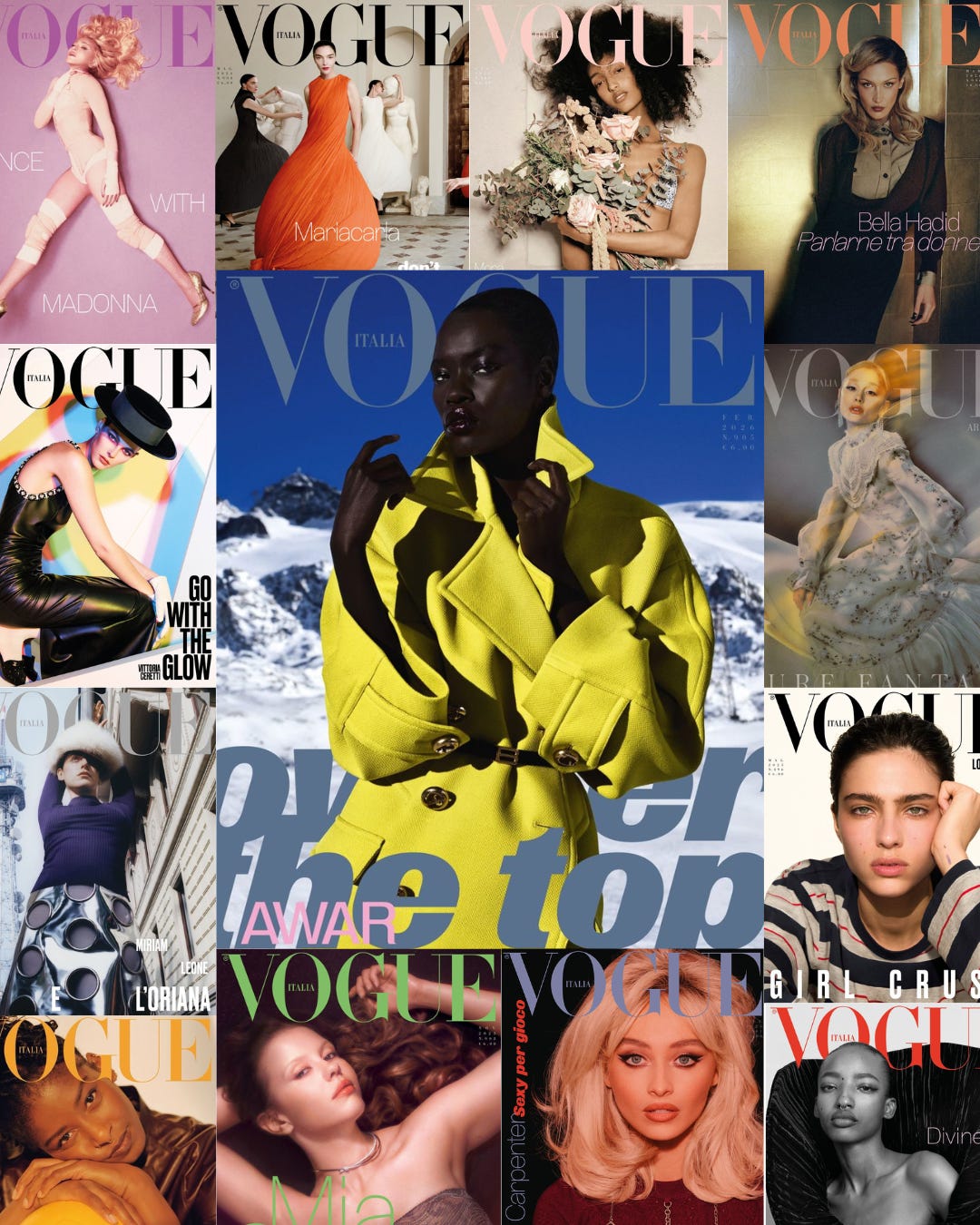
It’s embarrassing how #flop American Vogue is compared to its sister magazines.
This cover shoot, specifically, had some potential to be okay, given the fact that Kaia Gerber is actually a model. The styling isn’t complete trash (aside from the ghastly Louis Vuitton outfit that I don’t even want to include because it made my eyes melt out of my sockets), but the grey background carried throughout the entire shoot does a disservice to pretty much everything. These photos could be major if we had…well, any contrast at all. What a shame.
The nepo baby narrative is tired.
My problem doesn’t explicitly lie with the cover itself—the overall narrative of this issue is heavily tied to the “nepo baby” discourse that has become one of the most overplayed themes in recent pop culture history.
It’s a gimmick that keeps on giving…us absolutely zero substance.
It really only works when the nepo baby in question is iconic in their own right, and not continuously propped up by the legacy of their famous parent. Only then does the nepo storyline become a fun part of their narrative, rather than the whole damn thing.
But again, the September issue is meant to introduce new ideas, explore fresh cultural avenues, and provide commentary on where fashion is headed. Harping on a dry subject matter that’s been beaten to death with verbal baseball bats for years feels like three steps back into a ditch.
I’m not sure I can stomach hearing yet another quote like:
“I’ve only ever been a nepo baby, and I’ve only ever benefited in my career from it. But what that’s done for me is make me want to work harder.”—Kaia Gerber
With the appointment of Chloe Malle as Vogue’s new Head of Editorial Content last September, I had hopes that the magazine would start to explore new ideas and introduce more meaningful fashion stories into its pages, with Malle having a journalistic background, rather than that of a passionate fashion-lover. But instead, it’s been the same old, same old.
But is it really a surprise that Malle, a self-proclaimed nepo baby herself (daughter of Candice Bergen and Louis Malle), chose to make this the most important throughline? Not at all. But I expected more.
Vogue’s finger is chronically behind the pulse.
I’m not going to sit here and act like this cover is the first time Vogue has missed the mark, but it’s insane how consistent they are at failing to have their finger on the pulse when they have all the resources to do better.
I mean, the past few September issues have also been as much of a joke as this one—Emma Stone’s horrible Louis Vuitton-clad cover and the tone-deaf shitshow that was Blake Lively x Baz Luhrmann. Who is it even for? They’ve completely lost the plot.
Yes, debuting Taylor Swift’s Dior wedding dress on the September 2026 issue would have been insanely predictable, but it would have at least been a big cultural moment worth highlighting. And it’s almost comical that they chose to spotlight this FX show with a cover and failed to take full advantage of the actual fashion phenomenon that was FX’s Love Story. Sure, they did a feature, but having a cover with Sarah Pidgeon and Paul Anthony Kelly would have been iconic. Such a wasted opportunity.
Where was a Charli XCX cover when Wuthering Heights came out or during the height of Brat Summer? An ancient Greece-inspired photoshoot and cover story with Zendaya and Law Roach to promote the Odyssey? Where is the “Women of a Certain Age” issue featuring Demi Moore and Isabelle Huppert in Balenciaga? Margaret Qualley and ASAP Rocky together on the cover in Blazy’s Chanel? Madonna?
Instead, we get bland covers with half-baked stories that say nothing worthwhile about the state of fashion.
Great photographers are brought in to shoot watered-down versions of the fashion photography that made them iconic in the first place—limited by Vogue’s lack of creative budget, ideas, and willingness to try anything new.
What will the future hold for Vogue?
Just remember, I rant because I care.
I’d love to see change in the right direction for the publication, but unfortunately I don’t anticipate that happening any time soon. Maybe if we’re lucky, they’ll let Marc Jacobs be guest editor again, but until then, I will hope for the best and expect the absolute worst.
Let me know your thoughts in the comments! Until next time, stay critical.
For business inquiries, email me at emileerussell1998@gmail.com
More Fashion, More Fun

Does the editor of Vogue need to be stylish?

One hand on a bag of Twizzlers, the other reaching for a Caffeine-Free Coca-Cola—that is how this newsletter finds me.
the louis vuitton show that made me lose faith in humanity

The 2026 Cannes Film Festival is finally over. What else?
menswear...do we care?

I wasn’t going to talk about the recent menswear collections. Why? Because I never really have—at least not in any long-form newsletter.
Agreed! It’s like an AI cover but it’s not AI. It’s that bad. And you’re right, it flattens the otherwise lovely clothes and it reflects the most banal aspects of American “culture” and nepotism in all its boring blandness. American Vogue is so disappointing next to its international counterparts. I haven’t paid a whit of attention to it in years. It’s made itself irrelevant.
It’s giving “Kohls back to school ad” is the crystallization of everything wrong here. Kudos! 👏🏻👏🏻👏🏻